Union Depot and the Lowertown Revival
Restored as a working rail and transit hub, Union Depot anchors a Lowertown district of lofts, artists, a farmers market and a ballpark.
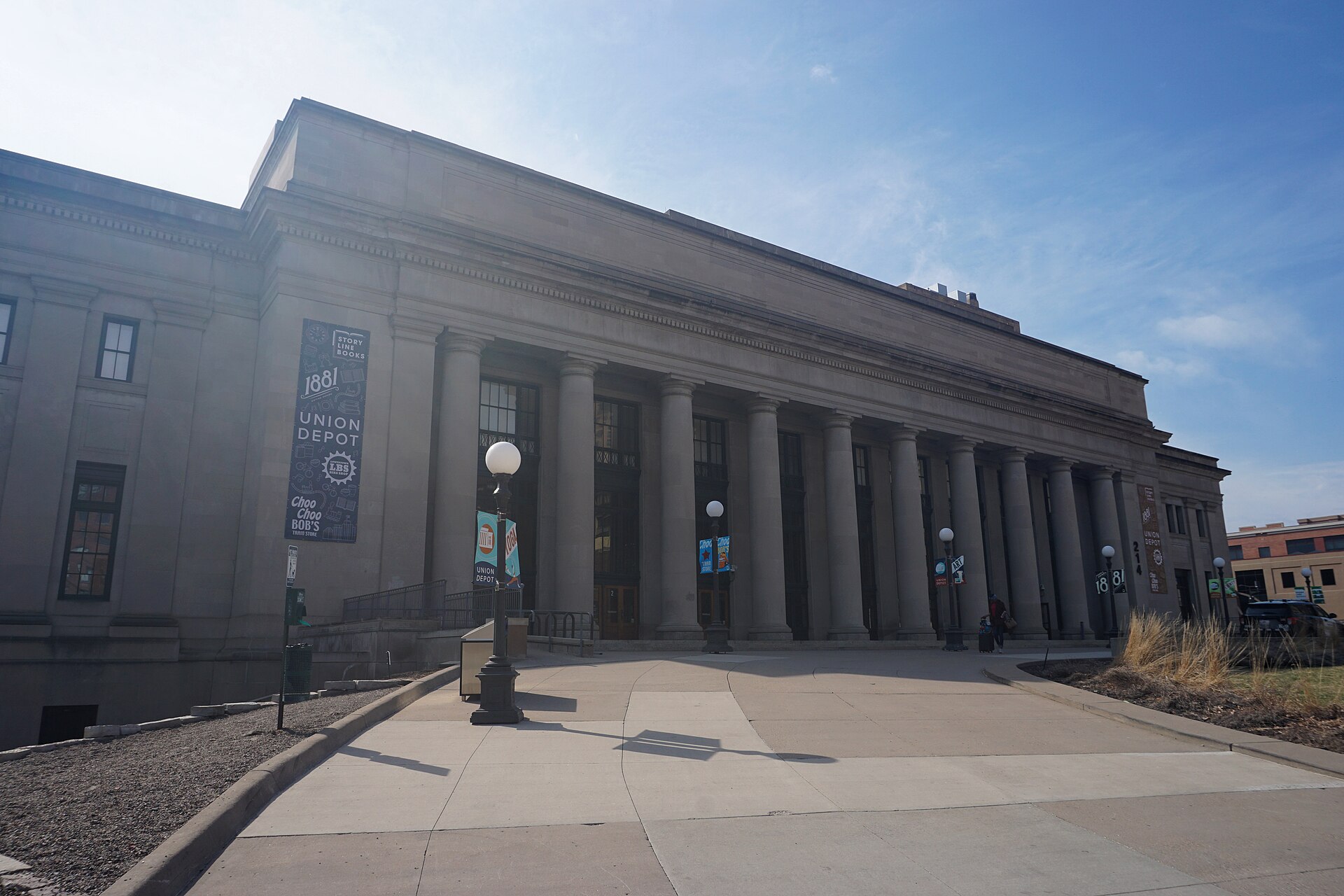
When Union Depot reopened to rail passengers in the last decade, it restored more than a building. The grand head house on Kellogg Boulevard, completed in the 1920s in the era when Saint Paul was a great railroad crossroads, once again had trains, buses and travelers moving through it, and Lowertown had its anchor back.
The revival around it built gradually. Warehouses became lofts and studios, the Saint Paul Farmers' Market found its long-term home nearby, CHS Field brought baseball to the district, and restaurants and galleries filled storefronts that had spent years quiet. The depot itself now hosts events under its high ceilings as readily as it handles Amtrak trains, intercity and local buses and light rail connections at its doors.
Union Depot works as a symbol because it is also infrastructure. A traveler can arrive on Amtrak's Empire Builder route, step into one of the most handsome public rooms in Minnesota, and walk directly into a living neighborhood. That continuity, train to street to home, is what the automobile era interrupted and what Lowertown has spent years reassembling.
In November, with early darkness and cold settling over the river bluffs, the depot's warm, lit interior makes the strongest case for the district. Come for a train, an event or no reason beyond seeing the waiting room glow at night. Lowertown's revival was never a single project. It is the accumulation of a depot reopened, a market in place, a ballpark busy in summer and neighbors who stayed, and it continues one arrival at a time.